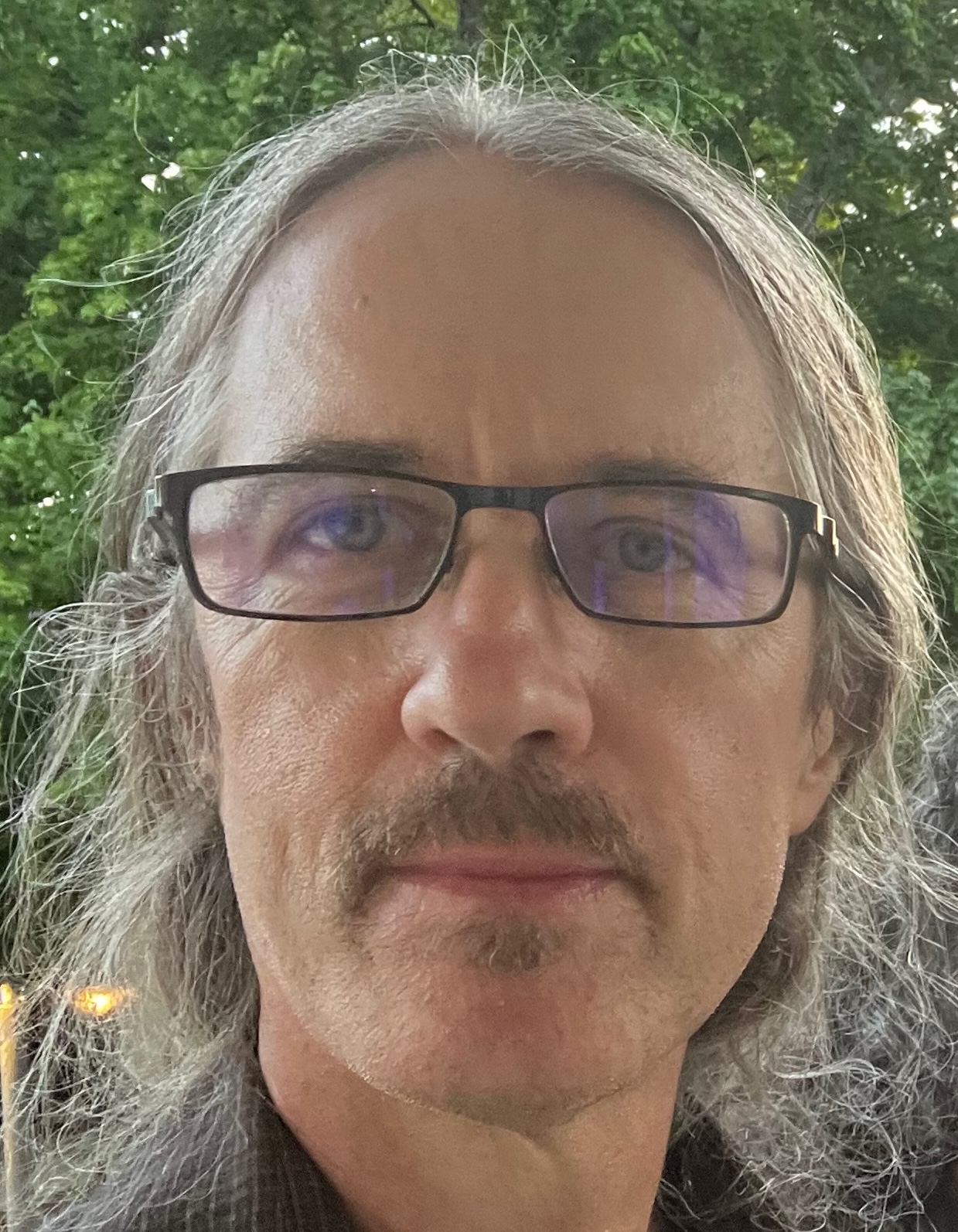
In February 2026, I started a position at the IPSL/LOCEAN laboratory in Paris working within the NEMO development team, and funded through Choose France for Science. I am using this time to pursue a suite of questions related to theoretical ocean physics and mathematics (see below). LOCEAN has a vibrant group of theoretical, numerical, and observational ocean and climate physicists, biogeochemists, and engineers, along with a community of 40-50 graduate students and postdocs. I work within the broader NEMO community, which offers many opportunities to collaborate with a wide range of theoretical and applied ocean scientists. The lab is within the Sorbonne Universite and is located in the Latin Quarter of Paris.
I hired two postdoctoral researchers, Oliver Street and Jamie Hilditch, who start at LOCEAN in early 2027. I am in the process of garnering funds for a third postdoc to advance analysis methods (e.g., watermass transformation theory, coarse-graining, vorticity analysis) and subgrid parameterizations (e.g., interface between mesoscale and submesoscale parameterizations) within the NEMO community ocean model. This position is targeted to start in the middle of 2027.
Here is an incomplete list of research topics in theoretical ocean physics and mathematics that are of interest to me and my group. Along with my postdocs, I hope to nurture a network of collaborators within Paris and abroad to pursue this research.
-
Ocean waves and mean flows using methods from quantum mechanics, Hamilton’s principle, and ray theory, as detailed in
Tracy et al. (2014). -
Modal and non-modal instabilities, with particular emphasis on nonlinear interactions in the presence of topography. Why do ocean physicists pay so little attention to non-normal growth, in contrast to atmospheric physicists? How can variational methods be used to study realistic ocean-flow stability in the presence of topography?
-
Coarse-graining methods and their use in understanding multiscale interactions in geophysical turbulence, and in informing subgrid-scale parameterizations. How can we understand the role of linear and nonlinear interactions between the gyrescale, mesoscale, and submesoscale, and their influence on emergent properties of the ocean general circulation? This work builds on Storer et al. (2022) and Storer et al. (2023).
-
Theory of ocean mesoscale and submesoscale turbulence that directly informs and constrains parameterizations for ocean circulation models. Can the parameterization of ocean geostrophic turbulence be framed in terms of Hamilton’s variational principle, and can such an approach lead to meaningful advances in ocean circulation modeling? Recent parameterization efforts have focused on mechanical energy, often leaving out the importance of boundaries. Can potential vorticity play a useful role in such parameterizations, given the central importance of boundary processes to potential vorticity?
-
Hamilton’s principle and differential geometry in numerical modeling. Recent advances offer new approaches to formulating fluid thermo-mechanical models based on discrete differential geometry. Can such methods be used to formulate the ocean’s equations in pursuit of the next generation of ocean circulation models?